
Your Change Workflow Remembers The Old Product

In 1990, Rebecca Henderson and Kim Clark wrote about a type of change that established companies often fail to see. The components stay the same, but the way they are connected changes. They called it architectural innovation.
Their explanation is what makes it relevant for configuration management. The knowledge of how a product fits together “tends to become embedded in the structure and information-processing procedures” of a company. When the architecture changes, that knowledge becomes wrong, and it is hard to notice because it is built into how people work every day.
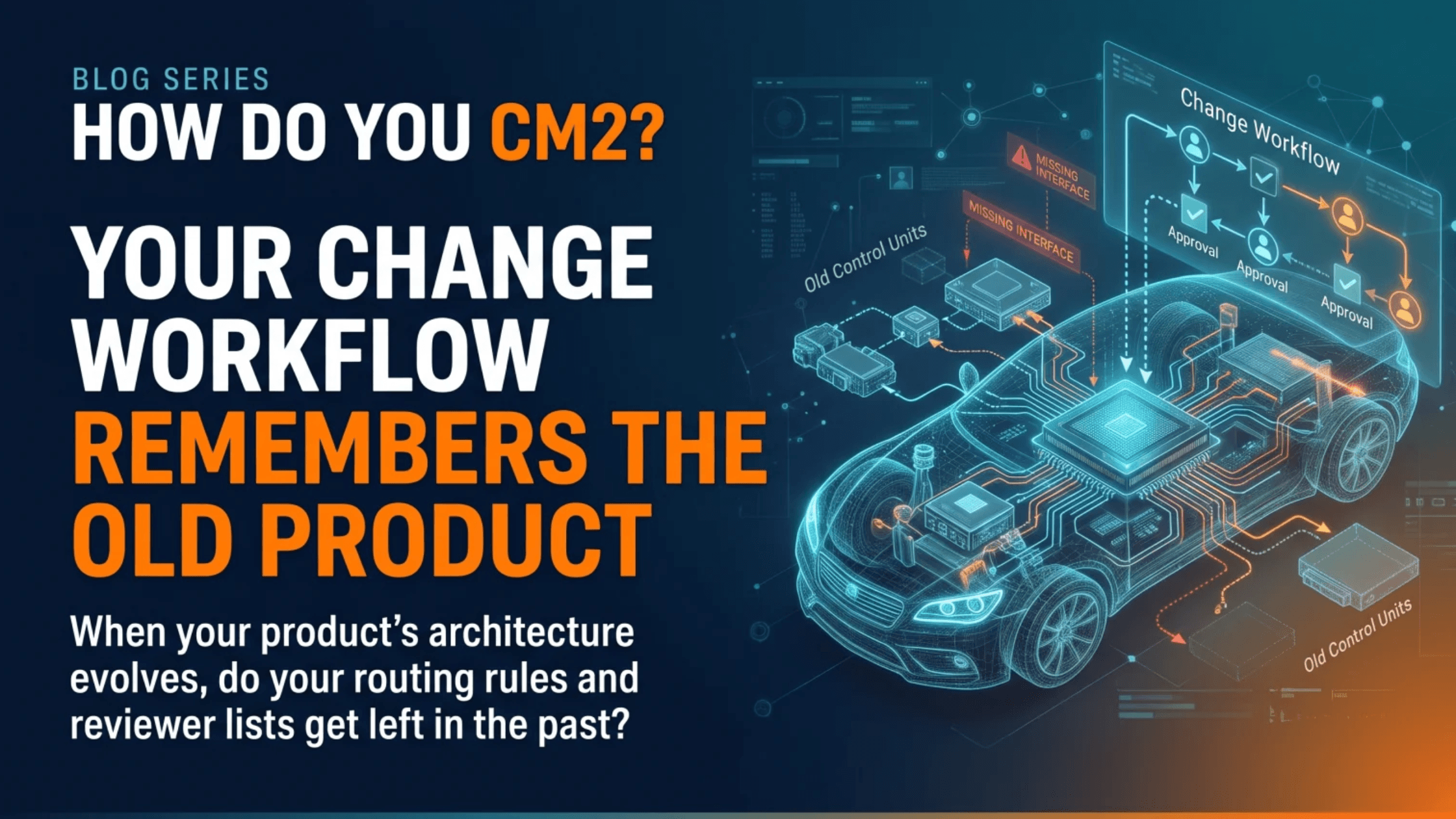
Think about where that knowledge sits in your change process. It sits in the routing rules of the change workflow, in the list of who reviews which type of item, in the impact-analysis checklist, and in the standard implementation tasks a change notice is built from. Most of these were set up for the product as it was when somebody configured them, and since then the product has changed many times while the workflow often stayed the same.
Imagine a vehicle where functions move from many dedicated control units to a few central computers. A sensor is still a sensor and a harness is still a harness, but the links between them change. A change to one software function now touches hardware it never touched before, and teams that used to work apart now share an interface. If the workflow still routes that change to the team that owned the old control unit, the people who should be at the table are never invited. Nobody notices, because the workflow completed without errors.
To be fair, a good Change Leader will often catch this, because they know the product. But then the process depends on one person, and the impact matrix can only show what the people filling it in know to look for. We are usually very clear about who owns an item, and much less clear about who owns the interface between two items.
So my challenge to the PLM vendors: which of you will tell a company that its routing rules no longer match its product structure? And to CM teams: when did you last check your reviewer lists against the current architecture of your product?
What was the last architectural shift in your product, and how long did it take before your change process caught up? Let me know what you think.
Ready to go deeper?
Use code Martijn10 for 10% off training—and don’t forget to tell them Martijn sent you 😉.
Copyrights by the Institute for Process Excellence
This article was originally published on ipxhq.com & mdux.net.