December 12, 2025
President
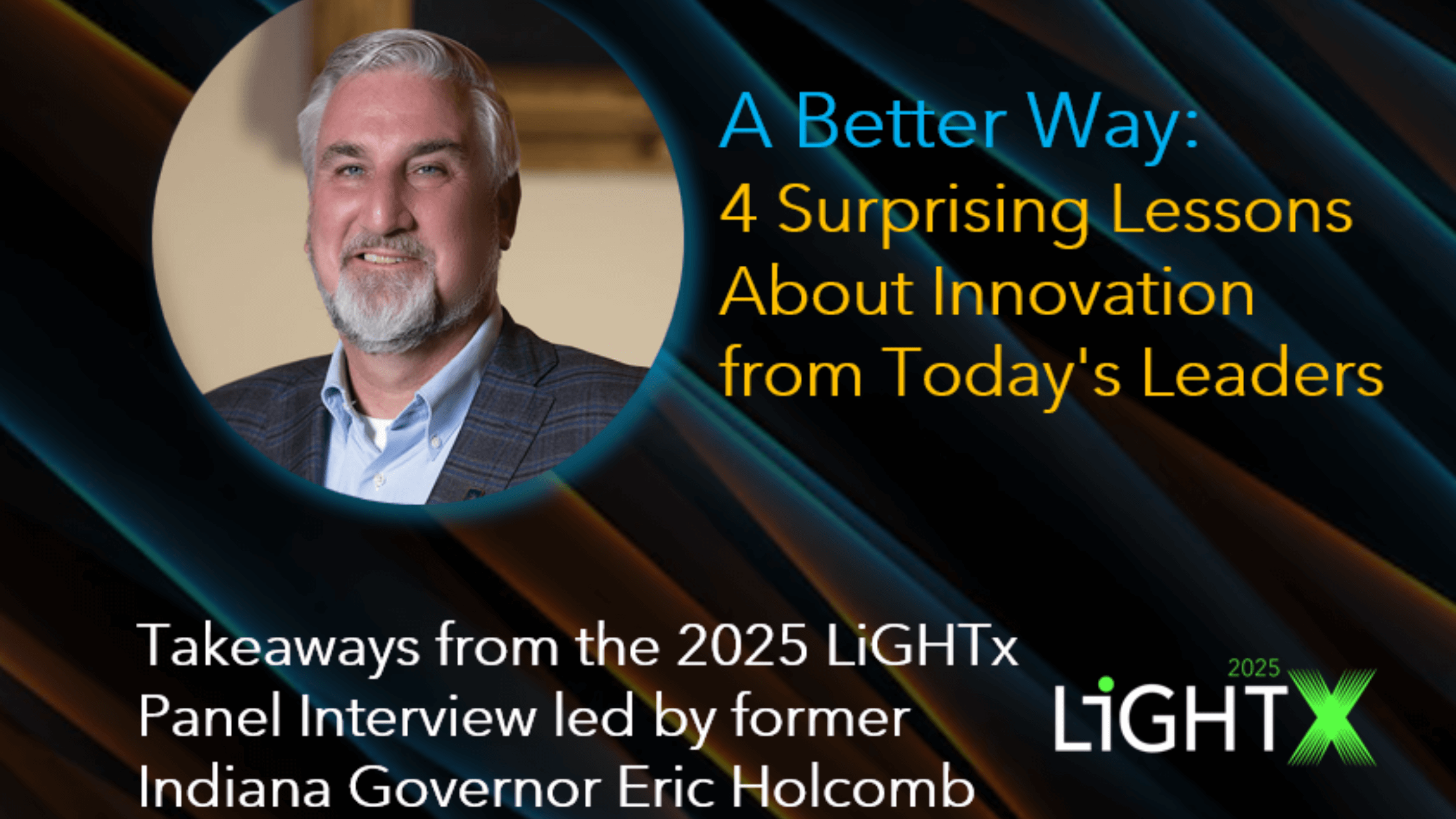
In the modern business landscape, the pressure to "innovate" is constant. It’s the buzzword in every boardroom, the goal of every quarterly plan, and the subject of countless articles. Yet, for all the talk, the path to meaningful innovation often feels ambiguous, cluttered with misconceptions and grand theories that offer little practical guidance.
It's a frustrating paradox: everyone agrees innovation is critical, but few can agree on how to achieve it.
That’s why a recent panel discussion featuring a diverse group of leaders ranging from media producers and med-tech executives to process excellence experts was so refreshing. They didn't offer silver bullets or abstract frameworks. Instead, they shared hard-won, practical, and often counter-intuitive insights from the trenches.
Here are the five most impactful lessons from the conversation, offering a clear-eyed look at what real innovation requires.
One major insight reframes the concept of innovation entirely. Instead of viewing it as a lightning strike of pure genius or the result of a rigid, top-down plan, it is better described as an "intentional accident." The outcome might feel spontaneous, but the conditions that allowed it to happen were anything but.
This is a powerful mental shift for any leader. It moves your role from being the primary source of ideas to being the architect of an environment where ideas can collide and flourish. This involves deliberately putting the right disciplines, diverse perspectives, and even creative boundaries in place. You aren't commanding a breakthrough; you're staging the scene where one is most likely to occur.
"Innovation is often an intentional accident. It feels accidental, but it's not exactly accidental always. And as leaders, we need to cultivate that environment that helps make that happen."
A med-tech executive shared a memorable analogy that every leader should take to heart. They compared the raw, early-stage concepts from brilliant engineers to a childhood drawing of a "big blue monster." While a leader's first instinct might be to critique the drawing for its lack of realism, the reaction in that moment is what matters most.
The advice is to "ask questions" rather than pass judgment. This is a practical method for building psychological safety. By treating a raw idea with curiosity asking, "Tell me a little bit about why you did that" a leader signals that experimentation is safe, even if the initial result is imperfect. This approach empowers teams to stay bullish and excited about their work, reminding them that great things are never pretty when they start.
"As a leader of an organization, whatever you say right now could kill a project or keep them going. And so I think the way that we cultivate that is to ask questions."
In a world obsessed with disruptive technology, the panel offered a vital reality check: many companies are too focused on finding the next "big bang" product. In doing so, they overlook the immense value of foundational improvements.
There is often a "ton of low-hanging fruit" to be found in optimizing processes, increasing efficiency, and improving effectiveness. These aren't the kinds of projects that generate flashy headlines, but they are critical for sustainable growth. Using the current AI hype as an example, it was noted that the smartest companies are first pausing to clean up their foundational data because "no one wants bad data faster."
The key insight is that the cumulative effect of many small, "boring" improvements not only builds a stronger operational foundation but can be just as powerful as one major disruptor.
One of the most profound takeaways centered on the unintended consequences of company culture. Leaders have a natural tendency to praise the "save the dayers" the heroic firefighters who swoop in to solve a crisis. While this recognition seems positive on the surface, it creates a dangerous incentive structure.
By constantly celebrating heroes who solve emergencies, organizations implicitly reward work that happens outside of established processes. Meanwhile, the employees who are quietly and diligently building stable, long-term best practices the very systems designed to prevent fires in the first place often go unnoticed. This fosters a culture that thrives on preventable emergencies rather than sustainable systems.
The imperative for leaders is to create new recognition rituals that celebrate the employees whose process improvements prevented the fires, not just those who put them out.
"It's easy to praise that 'save the dayer', but is that really getting you where you want to be longer term? What we praise, we incentivize."
How do you find people who can truly innovate? One creative executive shared a brilliantly simple hiring technique. When considering candidates, they often ignore the traditional resume and formulaic cover letter. Instead, they ask for a "daydream letter."
The purpose is to filter for genuine creativity and self-awareness. It was noted that many candidates fail this test, defaulting to formulaic responses that reveal "no creativity, no sense of who they are." For any hiring manager struggling to gauge the intangible qualities of imagination and personality from a standard application, this is a powerful takeaway. To find creative minds, you have to ask creative questions.
The overarching theme from the discussion was clear: real, sustainable innovation is less about grand strategies and more about the daily cultivation of the right culture, mindset, and environment.
It’s about creating the conditions for accidents to happen, nurturing ideas when they are still fragile, and valuing the boring work that builds a strong foundation. It requires rewarding the system-builders, not just the firefighters, and hiring for imagination, not just experience.
Ultimately, innovation isn't something you declare; it's something you do. The question is, which of these "accidents" do you need to start staging in your own work?

Brandy Taylor is the President at IpX with over 20 years of experience in engineering and project management within the aerospace, civil, military and automotive industries. Brandy holds a Bachelor's and Master's degree in Aerospace Engineering from the University of Michigan, and a CM2-Professional certification.


